Sleep Cycle Calculator: Find Your Ideal Bedtime
Use our sleep cycle calculator to find the best time to go to bed or wake up. Based on 90-minute cycles for 4-6 complete cycles per night.
Oneironaut Team · January 28, 2026 · 4 min read
Quick Answer
To wake up refreshed, count backward in 90-minute cycles from your wake time. For a 6:00 AM wake up, ideal bedtimes are 9:00 PM (5 cycles), 10:30 PM (4 cycles), or 12:00 AM (3 cycles). Add 15 minutes to fall asleep. Waking at the end of a cycle—rather than mid-cycle—helps you feel alert instead of groggy.
At a Glance
The key to waking up refreshed isn't just how long you sleep—it's when you wake up within your sleep cycle.
Each sleep cycle lasts about 90 minutes. Wake at the end of a cycle (during light sleep) and you feel alert. Wake mid-cycle (during deep sleep) and you feel groggy, even after 8+ hours.
Use these tables to find your ideal bedtime or wake time.
Bedtime Calculator: When to Sleep
If you need to wake up at a specific time, count backward in 90-minute cycles. Add 15 minutes to fall asleep.
Wake Up at 5:00 AM
| Cycles | Sleep Duration | Bedtime |
|---|---|---|
| 6 cycles | 9 hours | 7:45 PM |
| 5 cycles | 7.5 hours | 9:15 PM |
| 4 cycles | 6 hours | 10:45 PM |
Wake Up at 6:00 AM
| Cycles | Sleep Duration | Bedtime |
|---|---|---|
| 6 cycles | 9 hours | 8:45 PM |
| 5 cycles | 7.5 hours | 10:15 PM |
| 4 cycles | 6 hours | 11:45 PM |
Wake Up at 7:00 AM
| Cycles | Sleep Duration | Bedtime |
|---|---|---|
| 6 cycles | 9 hours | 9:45 PM |
| 5 cycles | 7.5 hours | 11:15 PM |
| 4 cycles | 6 hours | 12:45 AM |
Wake Up at 8:00 AM
| Cycles | Sleep Duration | Bedtime |
|---|---|---|
| 6 cycles | 9 hours | 10:45 PM |
| 5 cycles | 7.5 hours | 12:15 AM |
| 4 cycles | 6 hours | 1:45 AM |
Wake Time Calculator: When to Get Up
If you're going to bed now, here's when to set your alarm for complete cycles.
Going to Bed at 10:00 PM
| Cycles | Sleep Duration | Wake Time |
|---|---|---|
| 4 cycles | 6 hours | 4:15 AM |
| 5 cycles | 7.5 hours | 5:45 AM |
| 6 cycles | 9 hours | 7:15 AM |
Going to Bed at 11:00 PM
| Cycles | Sleep Duration | Wake Time |
|---|---|---|
| 4 cycles | 6 hours | 5:15 AM |
| 5 cycles | 7.5 hours | 6:45 AM |
| 6 cycles | 9 hours | 8:15 AM |
Going to Bed at 12:00 AM (Midnight)
| Cycles | Sleep Duration | Wake Time |
|---|---|---|
| 4 cycles | 6 hours | 6:15 AM |
| 5 cycles | 7.5 hours | 7:45 AM |
| 6 cycles | 9 hours | 9:15 AM |
Times include 15 minutes to fall asleep.
How Many Cycles Do You Need?
Research recommends adults get at least 7 hours of sleep per night. Here's what each cycle count means:
- 4 cycles (6 hours): Minimum functional sleep. Fine occasionally, not sustainable long-term.
- 5 cycles (7.5 hours): Optimal for most adults. Meets the 7+ hour recommendation.
- 6 cycles (9 hours): For high sleep needs, recovery, or illness.
Most people do best with 5 complete cycles.
Why This Works
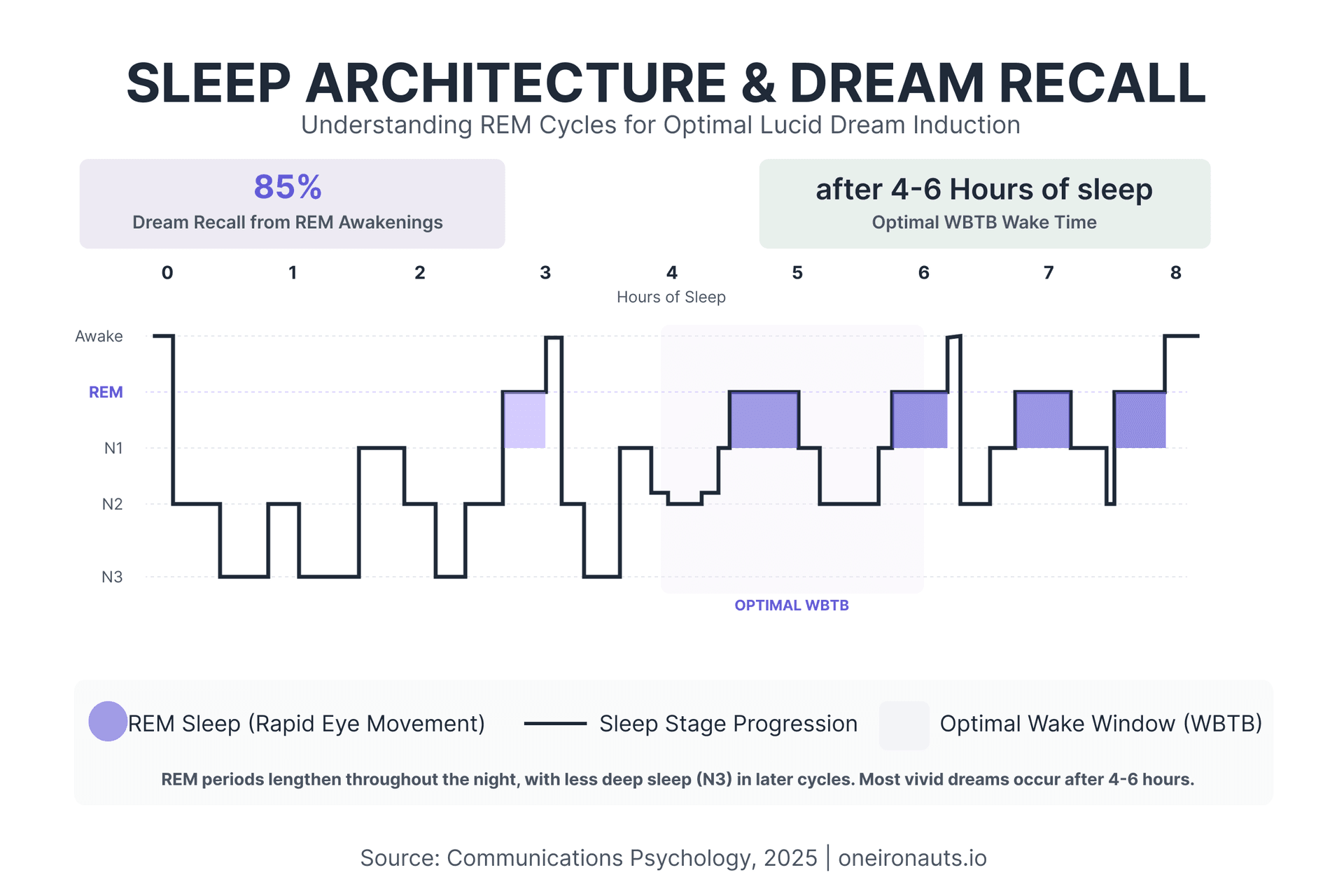
Sleep happens in repeating 90-minute cycles, each with four stages:
- Light sleep (N1) — Easy to wake, transition phase
- Light sleep (N2) — Body temperature drops, heart slows
- Deep sleep (N3) — Hard to wake, physical restoration
- REM sleep — Dreaming, memory consolidation
Waking during deep sleep (N3) causes sleep inertia—that heavy, disoriented feeling. Waking during light sleep (N1/N2) at the end of a cycle lets you get up easily.
This is why 6 hours sometimes feels better than 7. Six hours = 4 complete cycles. Seven hours = 4.6 cycles, meaning you wake mid-cycle.
Tips for Better Sleep Timing
Be consistent. Your body's circadian rhythm works best with regular sleep and wake times—even on weekends.
Account for sleep latency. Most people take 10-20 minutes to fall asleep. The tables above include 15 minutes, but adjust if you fall asleep faster or slower.
Don't hit snooze. Falling back asleep starts a new cycle you won't complete. You'll wake up groggier than before.
Track your results. Individual cycles vary from 80-120 minutes. If you consistently wake groggy at calculated times, try shifting by 15-20 minutes.
Related Articles:
Sources: StatPearls NCBI, American Academy of Sleep Medicine, Sleep Foundation