Sleep 101: Understanding Your Sleep Cycles and Stages
Learn how sleep actually works, from the 4 stages of sleep to why you need 7-9 hours. Discover what happens in your brain and body during each sleep cycle.
Oneironaut Team · November 6, 2025 · 15 min read
Quick Answer
Sleep occurs in repeating cycles of approximately 90-110 minutes, each containing four distinct stages: three stages of non-REM (NREM) sleep and one stage of REM sleep. Adults typically experience 4-6 complete sleep cycles per night, with approximately 75% of sleep spent in NREM stages and 25% in REM sleep. The American Academy of Sleep Medicine recommends adults obtain 7 or more hours of sleep per night to promote optimal health.
At a Glance
Every night, you slip into unconsciousness for several hours. Your brain cycles through distinct patterns of activity. Your body repairs itself. Memories consolidate. Yet for something you do every single day, sleep remains surprisingly mysterious.
Research shows that sleep isn't just "shutting down"—it's an active, dynamic process with multiple stages, each apparently serving different functions. Understanding how sleep actually works might help you appreciate why those recommended 7-9 hours matter so much. Or at least understand what you can do to improve your sleep quality.
Let's explore the basics: what happens when you drift off, how your brain and body cycle through different stages, and why this nightly journey seems essential for your health.
What Is a Sleep Cycle?
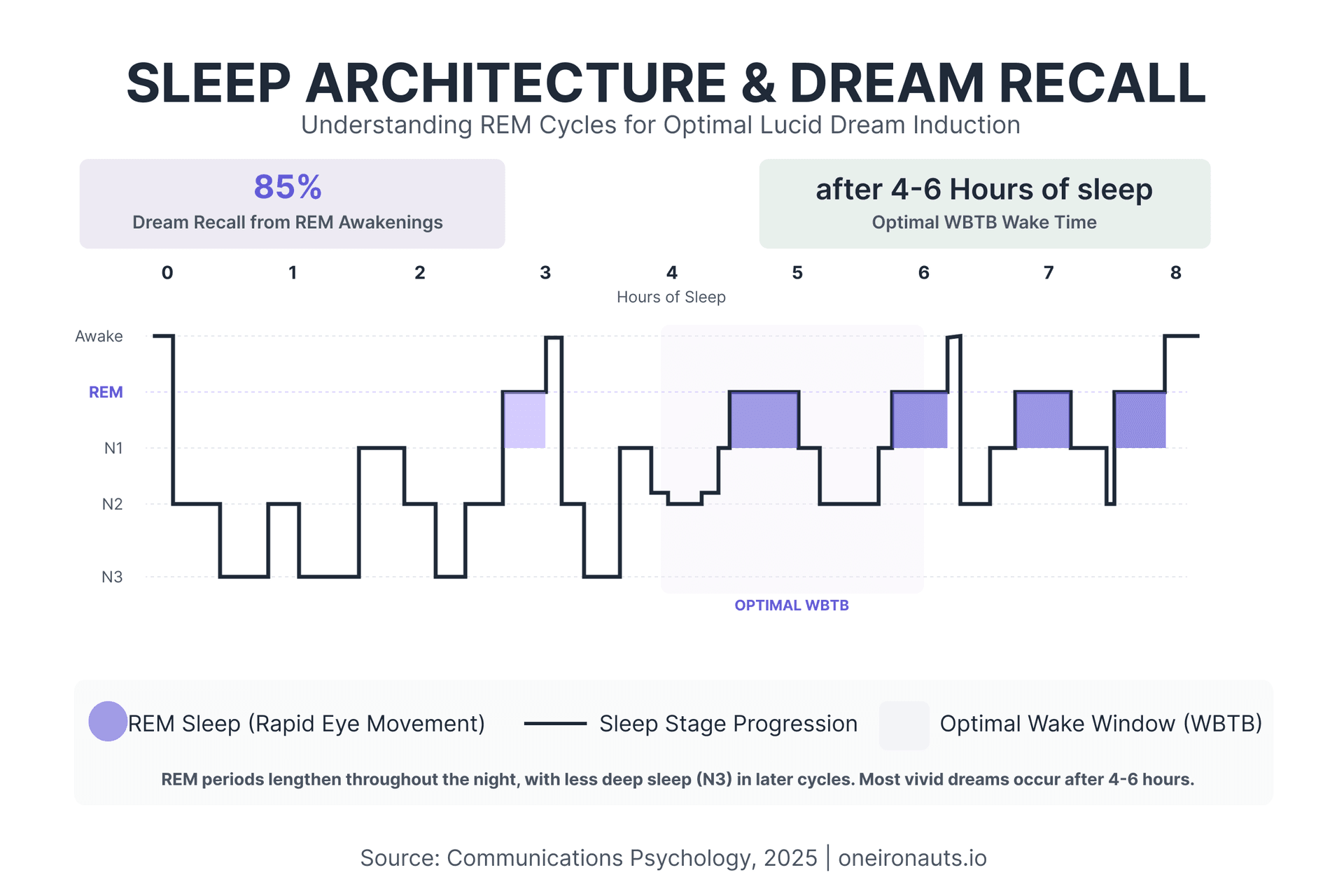
When you fall asleep, you don't stay in one static state all night. Instead, your brain and body move through a predictable sequence of stages that repeat multiple times until you wake up. That's a sleep cycle.
Research in StatPearls suggests a complete sleep cycle lasts roughly 90 to 110 minutes on average. The first cycle of the night? Usually shorter—around 70 to 100 minutes. Later cycles stretch longer, typically 90 to 120 minutes.
During a typical night, you'll experience 4 to 6 complete cycles. Eight hours of sleep usually means about 5 cycles. Here's what's interesting: each cycle isn't identical. As the night goes on, the composition changes. You'll spend more time in certain stages and less in others.
The Two Types of Sleep
Sleep is divided into two fundamentally different types:
Non-REM (NREM) Sleep: This makes up approximately 75-80% of your total sleep time. NREM sleep splits into three distinct stages, each progressively deeper.
REM Sleep: Rapid Eye Movement (REM) sleep accounts for about 20-25% of your sleep. This is when most vivid dreaming happens and when your brain activity looks similar to wakefulness.
Your body appears to need both types. Each seems to serve different purposes—physical health, cognitive function, emotional well-being.
The 4 Stages of Sleep
Let's break down what happens in each stage of the sleep cycle, from the moment you start drifting off to your most vivid dreams.
Stage 1: Light Sleep (N1)
This first stage is the transition between wakefulness and sleep. Stage 1 is characterized by light sleep where you can be easily awakened.
What happens:
- Your brain waves begin to slow from the rapid beta waves of wakefulness
- Your muscles start to relax
- Your eyes may make slow, rolling movements
- You might experience sudden muscle jerks (called hypnic jerks)
- This stage typically lasts only a few minutes
Stage 1 comprises a very small percentage of your total sleep time. Think of it as the gateway into deeper sleep—the transitional moment when consciousness begins to slip away.
Stage 2: Deeper Light Sleep (N2)
Stage 2 is where you spend the most time during the night—accounting for about 45% of your total sleep. This is true, consolidated sleep rather than the drowsy transition of Stage 1.
What happens:
- Your heart rate slows and body temperature drops
- Your eyes stop moving
- Brain waves slow further but show brief bursts of activity called "sleep spindles" and "K-complexes"
- You become less aware of your surroundings
- It becomes harder to wake you up
According to research, these characteristic brain wave patterns—sleep spindles and K-complexes—appear to play a role in memory consolidation and protecting sleep from disruption. As the night progresses, you'll spend increasingly more time in Stage 2 and less in the deeper Stage 3.
Stage 3: Deep Sleep (N3)
Stage 3 is the deepest, most restorative stage of sleep. This stage is also called slow-wave sleep because of the high-amplitude, slow brain waves that characterize it on an EEG.
What happens:
- Brain waves become very slow and synchronized (delta waves)
- It's extremely difficult to wake someone from this stage
- If awakened, you'll likely feel groggy and disoriented (sleep inertia) for several minutes
- Blood pressure drops and breathing becomes slower
- Muscles are completely relaxed
Research shows that Stage 3 sleep is crucial for:
- Physical restoration and tissue repair
- Muscle growth and recovery
- Immune system strengthening
- Hormone regulation, including growth hormone release
- Cellular repair and regeneration
Deep sleep is most prevalent in the first third of the night. As you progress through your sleep cycles, you'll spend less and less time in deep sleep, with later cycles sometimes skipping this stage entirely. Studies indicate that Stage 3 typically makes up about 15-25% of total sleep in adults.
Without enough deep sleep, you'll wake up feeling unrested no matter how many hours you spent in bed. This stage is literally when your body does its most intensive repair work.
Stage 4: REM Sleep
After cycling through the three stages of NREM sleep, you enter REM (rapid eye movement) sleep—the stage most associated with vivid dreaming.
What happens:
- Your eyes move rapidly from side to side beneath your eyelids (hence the name)
- Brain activity increases dramatically, resembling patterns seen during wakefulness
- Heart rate and breathing become faster and irregular
- Your body experiences temporary paralysis (muscle atonia), except for your eyes and diaphragm
- Blood pressure rises
- Most vivid, narrative-style dreams occur
According to Johns Hopkins Medicine research, REM sleep plays crucial roles in:
- Memory consolidation: Transferring information from short-term to long-term memory
- Emotional processing: Working through emotional experiences from the day
- Learning: Strengthening new skills and information
- Creativity: Making novel connections between ideas
- Brain development: Particularly important in infants and children
Your first REM period of the night may last only 10 minutes. But as you move through subsequent sleep cycles, REM stages get progressively longer, with the final REM period potentially lasting up to an hour. This is why you're more likely to remember dreams from the early morning—you're having longer, more intense REM periods right before waking.
How Sleep Cycles Change Throughout the Night
Understanding that sleep cycles change as the night progresses is key to appreciating why full nights of sleep matter.
Early Night (Cycles 1-2):
- More time in deep sleep (Stage 3)
- Shorter REM periods (10-15 minutes)
- Your body focuses on physical restoration
Middle Night (Cycles 3-4):
- Balanced mix of Stage 2, deep sleep, and REM
- REM periods start lengthening (20-30 minutes)
Late Night (Cycles 5-6):
- Minimal to no deep sleep
- Longer REM periods (45-60 minutes)
- More time in Stage 2
- Your brain focuses on memory consolidation and emotional processing
This changing composition explains why cutting your sleep short—even by an hour or two—disproportionately affects your mental function and emotional regulation. You're losing primarily REM sleep, which occurs most abundantly in those final cycles.
Plan your sleep cycles
Use the free Sleep Cycle Calculator to find the best times to wake up for lucid dreaming practice.
Try the CalculatorHow Much Sleep Do You Really Need?
One of the most common questions about sleep is: how many hours is actually enough?
The American Academy of Sleep Medicine and Sleep Research Society conducted a comprehensive review and established a clear recommendation: adults aged 18 to 60 should obtain 7 or more hours of sleep per night to promote optimal health.
Most experts agree that the sweet spot for healthy adults is 7 to 9 hours, though individual needs vary. Research indicates that sleep needs are influenced by:
- Genetics: Some people naturally need more or less sleep
- Age: Sleep needs change throughout your lifespan
- Health status: Illness or recovery may require additional sleep
- Activity level: Intense physical or mental exertion increases sleep need
- Sleep quality: Poor quality sleep means you need more hours to feel restored
Why the 7-Hour Minimum Matters
Studies have consistently shown that regularly sleeping less than 7 hours per night is associated with:
- Increased risk of obesity, diabetes, and heart disease
- Weakened immune function
- Impaired cognitive performance and memory
- Mood disturbances and increased risk of depression
- Higher risk of accidents and injuries
The harsh reality? According to CDC data, approximately 35% of American adults regularly get less than 7 hours of sleep, with rates varying from 30% in Vermont to 46% in Hawaii. This chronic sleep deprivation has become a public health concern.
Can You Sleep Too Much?
While getting too little sleep is clearly problematic, can you get too much? Research suggests that consistently sleeping more than 9 hours may sometimes indicate an underlying health issue, though getting extra sleep when sick or catching up on sleep debt can be appropriate.
The key is listening to your body and maintaining consistency rather than obsessing over hitting an exact number of hours every single night.
Understanding Your Circadian Rhythm
Your sleep-wake cycle isn't random—it's controlled by an internal biological clock called your circadian rhythm.
The circadian rhythm is a 24-hour cycle that regulates when you feel alert and when you feel sleepy. This internal clock is located in a structure called the suprachiasmatic nucleus (SCN) in your brain's hypothalamus.
How Your Body Clock Works
Your circadian rhythm responds primarily to light, using it as the main cue to synchronize your internal clock with the external 24-hour day. Here's what happens:
Morning:
- Light enters your eyes and signals the SCN
- Melatonin production stops
- Body temperature rises
- Cortisol is released, promoting alertness
- You naturally wake up and feel energized
Evening:
- Darkness triggers the SCN
- The brain releases melatonin (the "sleep hormone")
- Body temperature begins to drop
- You start feeling drowsy
- Your body prepares for sleep
Research from the National Institute of General Medical Sciences shows that nearly every tissue and organ in your body has its own circadian clock, all coordinated by the master clock in your brain. This system influences not just sleep, but also:
- Hormone release
- Eating patterns and metabolism
- Digestion
- Body temperature
- Immune function
What Disrupts Your Circadian Rhythm
Several factors can throw your internal clock out of sync:
- Irregular sleep schedules: Going to bed and waking up at wildly different times
- Artificial light at night: Especially blue light from screens, which suppresses melatonin
- Shift work: Working nights or rotating shifts fights against your natural rhythm
- Jet lag: Traveling across time zones faster than your body can adjust
- Age: The circadian system naturally changes with aging
- Insufficient natural light exposure: Spending all day indoors
Understanding your circadian rhythm is crucial because even if you get 8 hours of sleep, sleeping at the wrong times can leave you feeling unrested. Your body wants to sleep when it's dark and be awake when it's light—fighting against this natural pattern comes at a cost.
Sleep Hygiene: Setting Yourself Up for Success
Now that you understand how sleep works, let's talk about what you can do to optimize it. Sleep hygiene refers to the habits and environmental factors that promote consistent, restorative sleep.
Create an Ideal Sleep Environment
Research consistently shows that your bedroom environment significantly impacts sleep quality:
Temperature: Keep your room cool, between 60-68°F (15-20°C). Your body temperature naturally drops to initiate sleep, and a cooler room facilitates this process.
Darkness: Use blackout curtains or an eye mask. Even small amounts of light can suppress melatonin production and disrupt your sleep.
Quiet: Minimize noise with earplugs, a white noise machine, or a fan. Consistent ambient sound can mask disruptive noises.
Comfort: Invest in a comfortable mattress and pillows that support your preferred sleep position.
Maintain a Consistent Schedule
According to sleep experts, consistency is more important than you might think:
- Set a regular wake time: This is the single most important factor. Wake up at the same time every day, even on weekends.
- Consistent bedtime: Go to bed when you feel sleepy, ideally around the same time each night.
- Avoid "catching up" on weekends: Sleeping in disrupts your rhythm and makes Monday mornings harder.
Need help calculating your ideal bedtime? Our sleep cycle calculator finds the best time to go to bed so you wake at the end of a complete cycle instead of in the middle of one.
Mind Your Evening Habits
What you do in the hours before bed significantly affects your sleep quality:
Limit caffeine: Experts recommend avoiding caffeine for 4-6 hours before bedtime. It can stay in your system for much longer than you think.
Watch alcohol intake: Research shows that while alcohol may help you fall asleep initially, it disrupts sleep quality later in the night and reduces REM sleep.
Finish eating 2-3 hours before bed: Large meals close to bedtime can cause discomfort and interfere with sleep.
Reduce screen time: Blue light from devices suppresses melatonin. Try to avoid screens for at least 30-60 minutes before bed, or use blue light filters.
Develop a wind-down routine: Creating a consistent pre-sleep routine signals your body that it's time to sleep. This might include reading, gentle stretching, meditation, or a warm bath.
Lifestyle Factors That Support Better Sleep
Exercise regularly: Studies show that as little as 30 minutes of aerobic exercise per day can improve sleep quality. Just avoid vigorous exercise within 2-4 hours of bedtime.
Get morning sunlight: Exposure to natural light early in the day helps regulate your circadian rhythm and improve nighttime sleep.
Manage stress: Anxiety and worry are major sleep disruptors. Consider keeping a worry journal, practicing relaxation techniques, or setting aside time earlier in the day to process concerns.
Be cautious with naps: While short naps (20-30 minutes) in the early afternoon can be beneficial, longer or later naps may interfere with nighttime sleep.
When Sleep Problems Persist
If you're consistently having trouble falling asleep, staying asleep, or feeling rested despite following good sleep hygiene, it may indicate a sleep disorder. Common sleep disorders include:
- Insomnia: Difficulty falling or staying asleep
- Sleep apnea: Breathing repeatedly stops and starts during sleep
- Restless legs syndrome: Uncomfortable sensations and urge to move legs
- Narcolepsy: Excessive daytime sleepiness and sudden sleep attacks
- Circadian rhythm disorders: Your internal clock is misaligned with the external day-night cycle
According to the CDC, you should consult a healthcare provider if you:
- Regularly have trouble falling or staying asleep
- Feel excessively tired during the day despite adequate time in bed
- Snore loudly or gasp for air during sleep
- Have been told you stop breathing during sleep
- Experience unusual movements or behaviors during sleep
Sleep disorders are medical conditions that require professional diagnosis and treatment. Don't suffer unnecessarily—effective treatments are available for most sleep problems.
The Bottom Line
Sleep isn't a passive state where your brain shuts down—it's an incredibly active, precisely orchestrated process essential for your health. Research confirms that sleep significantly impacts brain function, memory, emotional regulation, immune function, and virtually every system in your body.
Understanding the basics—that you need 7-9 hours to complete 4-6 full sleep cycles, that each cycle progresses through distinct stages serving different purposes, and that your circadian rhythm needs to stay synchronized with the day-night cycle—empowers you to make better choices about your sleep.
The good news? Sleep quality is largely under your control. By maintaining a consistent schedule, creating an ideal sleep environment, and practicing good sleep hygiene, you can set yourself up for the restorative sleep your body needs.
Every hour you spend sleeping is an investment in your next day's energy, focus, mood, and long-term health. Now that you understand what's happening during those hours, you can appreciate why protecting and prioritizing your sleep is one of the most important things you can do for your overall well-being.
Ready to optimize your sleep for better dreams? Download our free Dream Journal Template and Sleep Tracker to start monitoring your sleep patterns and improving your rest—delivered straight to your inbox along with science-backed sleep tips.
Related Resources
- How Many Sleep Cycles Per Night Do You Need? - Our focused guide on optimal cycle count
- Physiology of Sleep Stages - StatPearls NCBI
- Sleep Foundation: Stages of Sleep
- NIH: How Sleep Works - Sleep/Wake Cycle
- Johns Hopkins: The Science of Sleep
- American Academy of Sleep Medicine: Sleep Duration Recommendations
- Harvard Medical School: Sleep Hygiene Tips
- CDC: About Sleep
Last Updated: January 13, 2026
Sources: This article synthesizes research from the National Institutes of Health (NIH/NHLBI), National Center for Biotechnology Information (NCBI), American Academy of Sleep Medicine, Sleep Research Society, Johns Hopkins Medicine, Harvard Medical School, Cleveland Clinic, Mayo Clinic, and the Centers for Disease Control and Prevention (CDC).
Disclaimer: This article is for informational and educational purposes only and should not replace professional medical advice. If you have persistent sleep problems, daytime fatigue, or symptoms of a sleep disorder, consult with a healthcare provider or sleep specialist for proper diagnosis and treatment.